
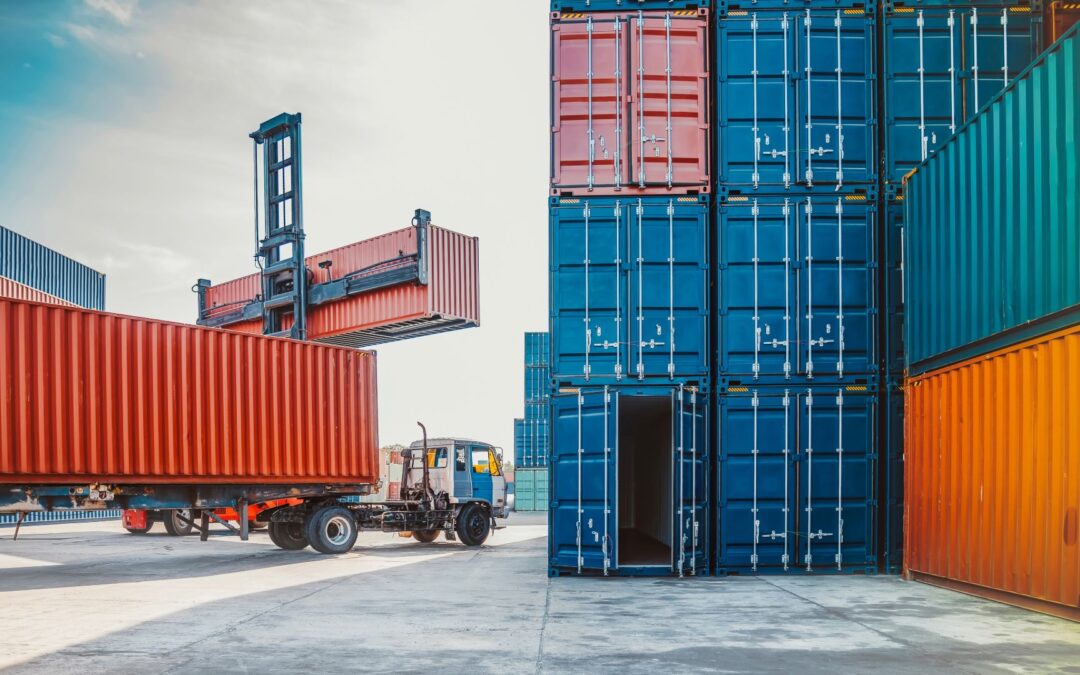
When a shipping container arrives at port, its journey is far from over.
The cargo still needs to be collected, cleared for movement, transported inland, unpacked where required and delivered to a warehouse, factory, distribution point or final customer. Each of these steps needs to happen in the correct order and within carefully managed timelines.
This is where professional container transport services become essential.
For importers and exporters, moving containers is not simply a matter of booking a truck. Port collections involve documentation, scheduling, vehicle planning, communication and close coordination between several parties. A delay at any point can lead to storage charges, missed production deadlines, stock shortages or unhappy customers.
Understanding how container transport works can help businesses plan more accurately, reduce avoidable costs and choose a logistics partner capable of managing the entire movement from port to destination.
What Are Container Transport Services?
Container transport services involve moving containerised cargo between ports, depots, warehouses, factories and other inland destinations.
Depending on the shipment and the business’s requirements, the service may include:
- Collection from a port or container depot
- Haulage to an inland facility
- Positioning the container for loading or unloading
- Unpacking or de-stuffing the container
- Temporary storage of the goods
- Redistribution to multiple destinations
- Returning the empty container to the nominated depot
- Coordinating export containers for delivery to port
Container transport may form part of an import process, an export process or a wider end-to-end logistics solution.
Overnight Logistics lists containerised cargo movements from major ports, inland transport solutions for imports and exports, national distribution, warehousing and Transport Management Solutions among its core transport and redistribution capabilities.
How Does Port Container Transport Work?
Although every shipment is different, the basic process usually follows a series of connected steps.
1. Shipment planning
Planning should begin before the vessel arrives.
The logistics provider needs accurate information about:
- The port of arrival
- Container size and type
- Cargo description
- Expected arrival date
- Delivery address
- Weight and handling requirements
- Unpacking arrangements
- Required delivery date
- Empty-container return instructions
Having this information early allows the transport provider to allocate the correct vehicle, schedule the collection and identify any operational risks.
2. Container availability
A container cannot always be collected immediately after the vessel reaches port.
It must first become available for release and movement. Documentation, customs processes, shipping-line procedures and terminal operations may all affect collection timing.
Businesses should maintain close communication with their clearing agent, shipping line and logistics provider so that each party knows when the container is ready.
3. Collection scheduling
Once the container is available, a collection slot or transport movement may need to be arranged.
Port congestion, restricted operating windows and vehicle availability can affect collection times. Experienced container haulage providers build these variables into the plan rather than treating the movement like a standard local delivery.
4. Inland transportation
The container is collected using a suitable truck and transported to the nominated location.
The destination might be:
- A customer’s premises
- A manufacturing facility
- A warehouse
- An unpacking depot
- A regional distribution hub
- A temporary storage site
The route, cargo weight and unloading facilities must all be considered before dispatch.
5. Unpacking or positioning
Some customers unload the container themselves. Others require the container to be taken to a logistics facility for unpacking.
Once unpacked, the goods may be:
- Checked against shipping documents
- Palletised
- Labelled
- Repacked
- Stored
- Consolidated
- Distributed to other destinations
The most efficient process depends on how quickly the stock is needed and whether the goods are moving to one or several locations.
6. Empty-container return
After unpacking, the empty container generally needs to be returned to the nominated depot within an agreed timeframe.
Failing to manage the return correctly may lead to additional charges. The return should therefore be treated as part of the original transport plan, not as an afterthought.
Why Container Transport Requires Careful Coordination
Container transport connects several independently managed parts of the supply chain.
These may include:
- International suppliers
- Shipping lines
- Port terminals
- Clearing agents
- Transport operators
- Warehouses
- Production teams
- Customers
- Empty-container depots
Each party may operate according to different systems, schedules and cut-off times.
This makes communication one of the most important elements of successful container transport. A logistics provider needs to know what is happening at the port, when the cargo is required inland and what resources will be available at the destination.
Poor coordination can create delays before the truck even begins its journey.
Common Challenges in Containerised Cargo Transport
Port congestion
Busy terminals can create longer collection times and unpredictable delays.
These disruptions may affect driver schedules, vehicle availability and delivery appointments. While congestion cannot always be avoided, it can be managed more effectively through early planning and responsive communication.
Documentation delays
Incorrect or incomplete documentation may prevent the container from being released.
Businesses should confirm requirements early and make sure that the clearing agent, shipping line and transport provider have the information they need.
Demurrage and detention exposure
Containers that remain at the port or outside the agreed free-use period may attract additional charges.
The exact rules depend on the shipping line, terminal and shipment agreement. Businesses should therefore understand the applicable timelines and coordinate collections, unloading and empty returns carefully.
Incorrect vehicle selection
Containers vary in size, weight and cargo type.
Sending an unsuitable vehicle can create safety issues, delays or failed collections. Accurate cargo and container information should always be supplied before the movement is booked.
Inadequate unloading facilities
A container may arrive at its destination only for the team to discover that there is no suitable equipment, space or labour available to unload it.
Before delivery, confirm:
- Whether the container will remain on the trailer
- Whether it needs to be grounded
- What unloading equipment is available
- How long the unloading process is expected to take
- Whether access restrictions apply
Poor communication
A missed update can have a ripple effect across the operation.
Production may be waiting for imported components. A warehouse may be expecting stock. Customers may have been promised a delivery date.
Clear and regular communication helps each team adjust its plans when conditions change.

Import Container Transport Versus Export Container Transport
Although both involve containerised cargo, imports and exports require different planning.
Import container transport
For imports, the focus is usually on collecting the container after arrival and moving it inland as efficiently as possible.
Important considerations include:
- Cargo release
- Port collection timing
- Delivery or unpacking arrangements
- Storage requirements
- Empty-container return
- Redistribution of imported goods
Export container transport
For exports, the cargo must be packed and delivered to the port before the relevant cut-off.
Important considerations include:
- Container positioning
- Loading dates
- Cargo readiness
- Export documentation
- Port delivery appointments
- Vessel cut-off times
A delay in an export movement can result in the container missing its planned sailing, which may disrupt customer commitments and future shipping schedules.
The Role of Warehousing in Container Logistics
Warehousing can make container movements significantly more flexible.
Instead of delivering the entire imported container directly to one customer site, the goods can be transported to a warehouse where they are unpacked, checked and stored.
From there, stock can be distributed according to actual demand.
This creates several advantages:
More control over inbound stock
Goods can be counted, inspected and organised before entering the wider supply chain.
Flexible delivery scheduling
Customers do not have to receive the full shipment immediately. Products can be released in smaller quantities as required.
Better space management
Businesses with limited on-site storage can use external warehousing instead of overcrowding their own premises.
Easier redistribution
Imported cargo can be divided and sent to different branches, retailers, factories or customers.
Access to additional services
Goods may need to be repacked, relabelled, strapped, crated or combined before distribution.
Overnight Logistics provides strategically located warehousing, on-site warehouse management, SAP-managed facilities, round-the-clock shifts and security, alongside specialised services such as repacking and relabelling.
Why an Integrated Logistics Partner Matters
Businesses can appoint one provider for transport, another for storage and a third for redistribution. However, every additional handover introduces another communication point and another opportunity for delay.
An integrated provider can coordinate:
- Port collection
- Inland transport
- Container unpacking
- Warehousing
- Stock handling
- Value-added services
- National distribution
This does not remove every supply chain risk, but it can make accountability clearer and planning more efficient.
Overnight Logistics offers a national fleet and distribution network, sophisticated routing and planning systems, containerised cargo movements, import and export inland transport and end-to-end supply chain solutions.
Questions to Ask a Container Transport Provider
Before appointing a provider, ask the following questions.
Do you collect from the relevant port?
Confirm that the provider regularly operates at the port or terminal where the cargo will arrive.
Can you manage both full and unpacked cargo movements?
Some shipments need direct container delivery. Others require unpacking and redistribution.
Do you provide warehousing?
Warehousing gives businesses another option when stock cannot be delivered immediately.
Can you handle national redistribution?
This is important when goods need to move beyond the initial inland destination.
How do you communicate delays?
Ask what updates will be provided and who will be responsible for communicating operational changes.
Can you support specialised handling?
Some cargo may require repacking, relabelling, strapping, crating or other preparation before final delivery.
Do you offer Transport Management Solutions?
Large or complex operations may benefit from a more structured transport-management model rather than individual ad hoc bookings.
How to Prepare for a Container Movement
A well-prepared customer makes it easier for the logistics provider to complete the job efficiently.
Before booking, gather:
- Container number
- Container size
- Cargo weight
- Port or depot details
- Release information
- Delivery address
- Site contact
- Access restrictions
- Unloading method
- Required delivery date
- Empty-return depot
- Special handling instructions
It is also useful to confirm whether the delivery site can accommodate the truck and container safely.
When Should You Outsource Container Transport?
Outsourcing may be the right option when your business:
- Does not operate suitable heavy vehicles
- Imports or exports irregularly
- Requires collections from several ports
- Needs inland warehousing
- Has goods destined for multiple regions
- Wants one partner to coordinate transport and storage
- Is experiencing frequent port-related delays
- Needs more visibility and accountability
The cost of outsourcing should be considered against the full internal cost of vehicles, drivers, compliance, scheduling, maintenance and operational management.
How Overnight Logistics Supports Containerised Cargo Movements
Overnight Logistics provides containerised cargo movements from South Africa’s major ports, together with inland import and export transport solutions. The business also offers national distribution, Transport Management Solutions, warehousing and specialised value-added services.
This combination allows customers to build a solution around the actual journey of their cargo.
For example, imported goods may be:
- Collected from port
- Transported inland
- Unpacked at a warehouse
- Checked and stored
- Repacked or relabelled
- Distributed nationally
Alternatively, a container may be collected and delivered directly to the customer’s premises.
The right approach depends on the shipment, delivery deadline and onward distribution plan.
FAQs
What are container transport services?
Container transport services move shipping containers between ports, depots, warehouses, factories and other inland destinations. They may include port collection, haulage, unpacking, temporary storage, redistribution and empty-container returns.
What is container haulage?
Container haulage refers to the road transport of loaded or empty shipping containers using suitable trucks and trailers.
Can a logistics company collect an imported container from port?
Yes, provided the container has been released and the necessary collection requirements have been met. The transport provider will also need the correct shipment and delivery information.
What happens after an imported container reaches a warehouse?
The container may be unpacked, and its goods counted, inspected, palletised, labelled, stored or prepared for onward distribution.
Can containerised cargo be delivered to several locations?
The container itself is generally moved to a single unloading location. Once unpacked, the individual goods can be redistributed to multiple branches, customers or regional destinations.
What is the difference between container transport and general freight transport?
Container transport deals specifically with standard shipping containers and often includes port or depot processes. General freight transport may involve pallets, cartons, machinery, loose goods or other cargo formats.
Why is early booking important?
Early booking gives the logistics provider time to allocate the correct vehicle, coordinate collection and delivery schedules and identify potential constraints.
Does Overnight Logistics offer container transport?
Yes. Overnight Logistics lists containerised cargo movements from major ports and inland transport solutions for imports and exports among its transport and redistribution services.
Conclusion
Container transport is a critical link between international trade and local operations.
The right service is not simply the one that moves a container from the port at the lowest quoted rate. It is the one that plans the full movement, communicates clearly, protects delivery timelines and connects the shipment to the next stage of the supply chain.
By combining containerised cargo transport with warehousing, specialised handling and national redistribution, businesses can reduce unnecessary handovers and create a more coordinated flow of goods.
For companies importing or exporting through South Africa’s major ports, Overnight Logistics offers the transport infrastructure, planning capabilities and supporting services needed to move cargo from port to inland destination.
Need help planning your next container movement? Speak to Overnight Logistics about a solution built around your cargo, timeline and destination.