
Most businesses think of logistics as two activities: storing products and transporting them.
In reality, goods often need a significant amount of work between arriving at a warehouse and being ready for sale, production or delivery.
Products may need new labels. Items may have to be combined into kits. Imported goods may need to be repacked for the local market. Corporate clothing may need to be sorted by employee, size or branch. Fragile equipment may require secure crating before transport.
These activities are known as value-added logistics services.
They sit between traditional warehousing and final distribution, helping businesses complete product-preparation tasks within the logistics environment rather than sending goods to multiple separate service providers.
For companies dealing with large volumes, complex product configurations or changing customer requirements, value-added services can reduce handling, shorten lead times and make the supply chain easier to manage.
What Are Value-Added Logistics Services?
Value-added logistics services are additional activities performed on goods as part of the storage, handling or distribution process.
They go beyond basic transport and warehousing.
Common examples include:
- Repacking
- Relabelling
- Product assembly
- Kitting
- Bundling
- Strapping
- Crating
- Sorting
- Quality checking
- Promotional packing
- Corporate clothing management
- Preparing stock for different branches or customers
The exact service depends on the product and the customer’s operational requirements.
Overnight Logistics describes value-added services as activities customers would otherwise have to perform themselves and offers solutions including repacking, relabelling, combining components, corporate clothing services, packing, strapping and crating.
Why Businesses Use Value-Added Services
At first glance, it may seem simpler to keep product preparation in-house.
However, internal processing can create several challenges:
- Limited floor space
- Temporary staffing requirements
- Additional equipment needs
- More product movements
- Delays between storage and processing
- Poor visibility across separate providers
- Higher risk of damage through repeated handling
Value-added logistics services allow the goods to be processed where they are already stored or moving through the supply chain.
This can reduce unnecessary transfers and make the final distribution stage more efficient.
Repacking Services
Repacking involves removing products from their original packaging and placing them into a different format.
This may be required when:
- Imported packaging is unsuitable for the local market
- Bulk stock needs to be divided into smaller units
- Products are being prepared for retail
- Packaging has been damaged
- Different items need to be combined
- Promotional packs are being created
- Customers require custom quantities
For example, a supplier may import products in bulk cartons, while retailers require smaller store-ready packs. Rather than transporting the bulk stock to another facility, the products can be repacked within the logistics operation and then distributed.
Benefits of logistics repacking services
Professional repacking can help businesses:
- Meet customer-specific requirements
- Reduce internal labour demands
- Prepare stock closer to dispatch
- Avoid additional transport movements
- Improve packaging consistency
- Respond to promotional or seasonal needs
The process should be carefully documented to maintain accurate stock records before and after repacking.
Product Relabelling Services
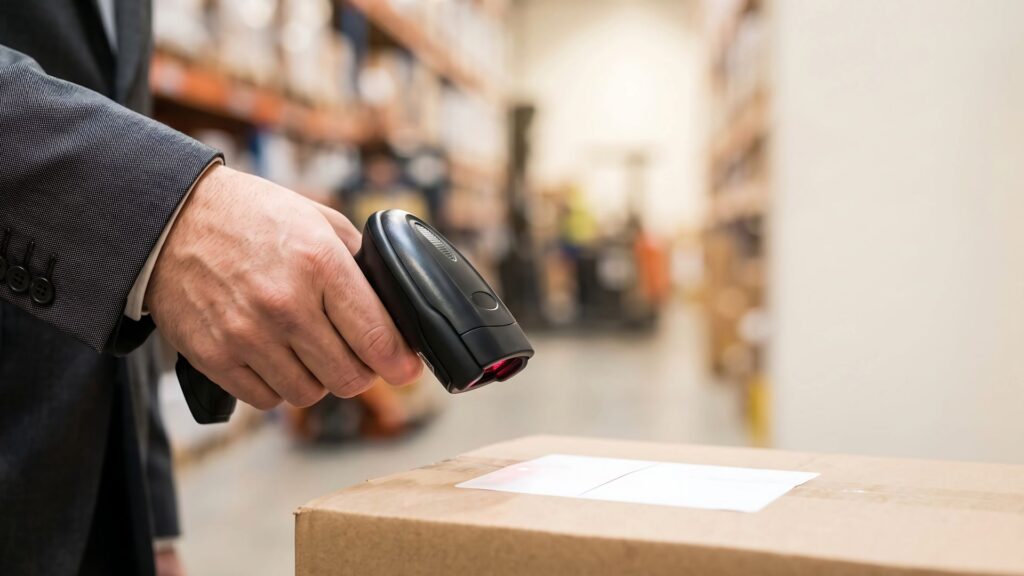
Relabelling involves applying, replacing or updating product labels.
Businesses may need relabelling when:
- Barcodes change
- Pricing information changes
- Products are assigned to different customers
- Packaging requires local information
- Promotional labels are added
- Stock needs to be reclassified
- Branding changes
- Import or retail requirements must be met
A relabelling project can range from applying a simple sticker to managing thousands of products across different stock-keeping units.
Why accurate relabelling matters
A label affects more than appearance. It may contain information needed for scanning, inventory control, pricing, routing or customer identification.
Incorrect labels can lead to:
- Warehouse picking errors
- Delivery mistakes
- Rejected retail stock
- Inventory mismatches
- Customer complaints
- Product delays
A structured relabelling process should therefore include clear instructions, quality checks and accurate inventory updates.
Kitting and Product Assembly
Kitting is the process of grouping separate items together to create one complete unit.
Examples include:
- Promotional gift packs
- Product-and-accessory bundles
- Starter kits
- Installation packs
- Employee packs
- Event materials
- Retail campaign bundles
- Components required for production
The individual items are received and stored separately. When required, they are picked, combined and packaged as a new kit.
Overnight Logistics specifically offers a repackaging service in which individual items can be combined to create a new item, such as fitting bottles with lids or screws and handling other similar applications.
Why kitting can improve efficiency
Kitting before dispatch means the receiving customer does not have to assemble the individual components.
This can:
- Save time at the destination
- Reduce missing parts
- Simplify order processing
- Create a consistent end product
- Support promotional campaigns
- Improve production-line readiness
For businesses sending the same set of products to many locations, centralised kitting can be far more manageable than asking each branch to assemble its own packs.
Packing, Strapping and Crating
Some goods need more protection than a standard box or pallet can provide.
Packing, strapping and crating services prepare items for safe handling and transportation.
Packing
Packing may include cushioning, wrapping, boxing and securing goods in a suitable outer package.
Strapping
Strapping helps stabilise cartons, pallets or other units so that they remain secure while being moved.
Crating
Crating provides a rigid structure around products that may be fragile, heavy, irregularly shaped or high in value.
These services are particularly useful for:
- Industrial equipment
- Machinery components
- Fragile goods
- High-value items
- Irregular loads
- Products moving over long distances
- Items requiring additional handling protection
Overnight Logistics includes packing, strapping and crating among its specialised and niche solutions.
Corporate Clothing Logistics
Corporate clothing programmes can become surprisingly complex.
A business may need to manage:
- Different garment types
- Employee sizes
- Department allocations
- Branch deliveries
- Branding requirements
- Seasonal uniforms
- Replacement orders
- Individual packing
Overnight Logistics offers corporate clothing solutions that can include sizing, cutting plans and final delivery.
Instead of delivering bulk clothing to a head office and expecting the internal team to sort it, the garments can be prepared according to the required allocation and distributed to the relevant destinations.
This reduces administration and helps ensure that the correct items reach the correct people.
The Link Between Value-Added Services and Warehousing
Value-added services are most efficient when they are connected to warehousing.
The products are already in the facility, which means they do not need to be transported elsewhere for processing.
A typical workflow may look like this:
- Goods arrive at the warehouse.
- Stock is received and recorded.
- Products are stored until required.
- A repacking, relabelling or kitting instruction is issued.
- The required stock is moved to the processing area.
- The work is completed and checked.
- Inventory records are updated.
- Finished goods are returned to storage or sent to dispatch.
- Products are distributed to their final destinations.
This approach provides a clearer chain of custody than sending goods through several separate facilities.
How Value-Added Services Reduce Supply Chain Handovers
Every time goods move between suppliers, processors, warehouses and transport providers, the business carries additional risk.
More handovers can mean:
- More transport costs
- Longer lead times
- Greater damage exposure
- More administration
- Reduced accountability
- More complicated stock reconciliation
An integrated logistics provider can complete several activities within one network.
For example, imported stock can be collected, unpacked, stored, relabelled and distributed without moving through a series of unrelated suppliers.
This can make the process easier to control and provide a single point of operational coordination.
Industries That Can Benefit
Value-added logistics services are useful across a wide range of sectors.
Retail
Retailers may need products labelled, priced, bundled or prepared for promotions before delivery to stores.
Manufacturing
Manufacturers may require components to be combined, sorted or delivered in production-ready kits.
Automotive
Automotive supply chains often depend on precise sequencing, accurate labelling and time-sensitive preparation.
Overnight Logistics also offers dedicated express transport for automotive Just-In-Time supply.
Corporate procurement
Businesses purchasing uniforms, equipment, stationery or employee packs may need items sorted and distributed by person, branch or department.
Import and export
Imported goods may require local labels, repacking or unpacking before they can enter the domestic market.
Marketing and promotions
Campaign packs, product samples and launch materials can be assembled before being sent to stores, customers or event locations.
Industrial products
Heavy, fragile or unusual items may require specialised packing, strapping or crating before transport.
How Value-Added Services Support Seasonal Demand
Businesses often need extra operational capacity during promotions, launches, year-end campaigns or seasonal peaks.
Hiring temporary staff and creating internal processing space for a short-term project can be inefficient.
A logistics provider with value-added capabilities can support activities such as:
- Promotional bundle assembly
- Seasonal relabelling
- Gift-pack preparation
- Store-specific allocations
- Campaign material distribution
- Employee uniform rollouts
Because the services can be connected to storage and transport, the finished goods can move directly into distribution once processing is complete.
Quality Control in Value-Added Logistics
Value-added work needs clear quality standards.
Before a project begins, the logistics provider and customer should agree on:
- Product specifications
- Packaging requirements
- Label placement
- Quantities
- Assembly instructions
- Sample approvals
- Quality-check procedures
- Rejection processes
- Inventory recording
- Completion dates
A small error repeated across thousands of units can become a major problem.
For this reason, the provider should establish a documented process and test the method before full production begins.
Questions to Ask a Value-Added Logistics Provider
Can you tailor the service to our product?
Value-added projects are rarely identical. The provider should understand the specific product, packaging and handling requirements.
Can the work be completed within the warehouse?
On-site processing may reduce transport and handling.
How will stock be controlled?
Ask how goods will be recorded before, during and after the project.
What quality checks are used?
The provider should explain how it will verify that labels, packs or kits meet the agreed specification.
Can you manage large-volume projects?
Capacity is important when deadlines are tight or volumes are high.
Can finished goods be distributed nationally?
Combining processing with distribution can simplify the final stage.
Can you support unusual requirements?
Specialised logistics partners should be able to assess non-standard requests and design an appropriate solution.
How to Plan a Repacking or Relabelling Project
Good preparation will make the project faster and more accurate.
Provide the logistics provider with:
- Product quantities
- SKU information
- Images or samples
- Packing specifications
- Label files
- Placement instructions
- Required completion date
- Destination details
- Quality standards
- Reporting requirements
Where possible, approve a finished sample before the full run begins.
It is also important to allow time for labels, packaging materials or other components to arrive before production starts.
Choosing Between In-House Processing and Outsourcing
In-house processing may make sense when volumes are small, the task is simple and the business has sufficient staff and space.
Outsourcing may be more practical when:
- Volumes are large
- Requirements change frequently
- Space is limited
- The work is labour-intensive
- Stock is already held externally
- National distribution is required
- The project is seasonal
- Goods need specialist packing
- The business wants one provider to coordinate the process
The decision should be based on total cost, lead time, capacity and operational risk rather than labour cost alone.
How Overnight Logistics Supports Specialised Logistics Requirements
Overnight Logistics provides value-added services across the supply chain, including:
- Repacking
- Relabelling
- Combining individual items into new finished units
- Corporate clothing solutions
- Sizing and allocation support
- Packing
- Strapping
- Crating
- Warehousing
- National transportation and redistribution
These capabilities can be combined into a tailored solution rather than treated as isolated services.
A customer may therefore store stock within the Overnight Logistics network, issue processing instructions as needed and distribute the finished products through the same logistics partner.
FAQs
What are value-added logistics services?
Value-added logistics services are additional activities performed on goods beyond basic transport and storage. They include repacking, relabelling, kitting, assembly, sorting, strapping, crating and product preparation.
What is a logistics repacking service?
A repacking service changes the format or packaging of goods. Products may be divided into smaller units, combined into promotional packs or placed into packaging suitable for a specific customer or market.
Can a logistics company relabel products?
Yes. Some logistics providers offer product relabelling as part of their specialised warehouse services.
What is kitting in logistics?
Kitting is the process of combining several individual products or components into one ready-to-dispatch pack or unit.
Why use a logistics provider for product assembly?
Completing assembly where the products are stored can reduce transport, handling and internal labour requirements.
What types of products need crating?
Fragile, heavy, valuable or irregularly shaped goods may require crating to protect them during handling and transportation
Are value-added services only for large businesses?
No. They may also help smaller businesses that do not have the staff, space or equipment to complete product-preparation projects internally.
Does Overnight Logistics provide repacking and relabelling?
Yes. Overnight Logistics lists repacking, relabelling, product-combination services, corporate clothing solutions, packing, strapping and crating among its specialised and niche capabilities.
Can processed goods be distributed after completion?
Yes. When value-added services are connected to transport and redistribution, finished goods can move directly into the delivery network.
Conclusion
Logistics is no longer limited to moving products between two locations.
Businesses increasingly need goods to arrive market-ready, customer-ready or production-ready. That may involve applying the correct labels, combining components, creating promotional packs, protecting fragile items or sorting products for individual destinations.
Value-added logistics services bring these tasks into the wider supply chain.
By connecting warehousing, processing and distribution, businesses can reduce handovers, improve control and free their internal teams from time-consuming operational work.
Overnight Logistics’ specialised and niche services are designed to complement its warehousing and national transport network, creating flexible solutions for customers whose products need more than storage and delivery.
Have a product-preparation or specialised handling requirement? Speak to Overnight Logistics about a value-added solution tailored to your goods, volumes and deadline.